QT Series Concrete Block Machines for Africa
Scalable, Automated Concrete Block Production for Africa
PJR Engineering supplies the QT Series Concrete Block Machines to manufacturers, contractors and developers across South Africa and African markets.
The QT Series is engineered for consistent block quality, scalable output and long-term operational reliability, making it suitable for both growing block yards and industrial production facilities.
Our role goes beyond machinery supply. We support clients with technical consultation, plant configuration guidance and long-term operational planning, ensuring each QT Series installation is aligned to local materials, site conditions and production goals.
QT Series at a Glance
The QT Series is a range of automatic concrete block making machines designed to manufacture:
- Concrete hollow blocks
- Solid blocks
- Pavers
- Kerb stones and selected precast elements
Each model supports hydraulic forming and vibration-based compaction, delivering uniform density and repeatable product quality across extended production cycles.
Typical applications include
- Commercial block yards
- Construction material manufacturers
- Property developers and contractors
- Infrastructure and municipal supply projects
For buyers evaluating concrete block machines in South Africa or brick making machines for Africa, the QT Series offers a practical balance between automation, output and long-term value.
QT Series Model Overview
The QT Series is available in multiple configurations to suit different production scales, site constraints and expansion plans.
| Model | Best suited for |
|---|---|
| QT6-15 Mobile Block Making Plant | Mobile or rapidly deployed production |
| QT6-15 Block Machine | Entry-level commercial block production |
| QT8-15 Block Machine | Growing block yards needing higher output |
| QT9-15 Block Machine | Medium-to-large production facilities |
| QT10-15 Block Machine | High-capacity commercial production |
| QT12-15 Block Machine | Industrial-scale, multi-shift plants |
Note: Final specifications, capacities and line configurations are confirmed during technical consultation to match local materials, power stability and production targets.
QT6-15 Mobile Block Making Plant
Flexible Block Production for Mobile or Remote Sites
The QT6-15 Mobile Block Making Plant is designed for projects requiring mobility, rapid deployment, and reduced civil works, while still delivering reliable concrete block production. Unlike fixed installations, this plant allows production to be established where the project is, making it particularly suited to African operating environments where infrastructure may still be developing.
This configuration is commonly selected for temporary sites, remote projects, or early-stage operations that need dependable output without committing to permanent plant construction.
Best suited for African conditions where:
- Projects operate across multiple locations or phases
- Permanent factory buildings are not yet in place
- Speed to production is critical to project timelines
- Civil works and fixed infrastructure need to be kept minimal
Key capabilities:
- Mobile-friendly plant configuration, allowing faster setup and relocation compared to fixed block plants
- Hydraulic forming and vibration compaction, delivering consistent block quality despite varying site conditions
- Supports multiple concrete products, including hollow blocks, solid blocks, pavers and kerbs through interchangeable moulds
- Designed for practical integration with mixers, conveyors and stacking systems as production requirements evolve
- Reduced installation footprint, lowering upfront site preparation costs and enabling faster commissioning
Operational Context
While mobile in configuration, the QT6-15 Mobile Block Making Plant is typically operated as a semi-permanent production solution per project phase, rather than moved daily. Many operators use this model to establish production quickly, then transition to more permanent infrastructure as demand stabilises.
This approach provides a controlled entry into block manufacturing without overcommitting capital at an early stage.
PJR Engineering support includes:
-
Site layout guidance aligned to project logistics
-
Commissioning support frameworks suitable for mobile setups
-
Operator orientation focused on consistency and uptime
-
Spares planning aligned to location, access and lead times
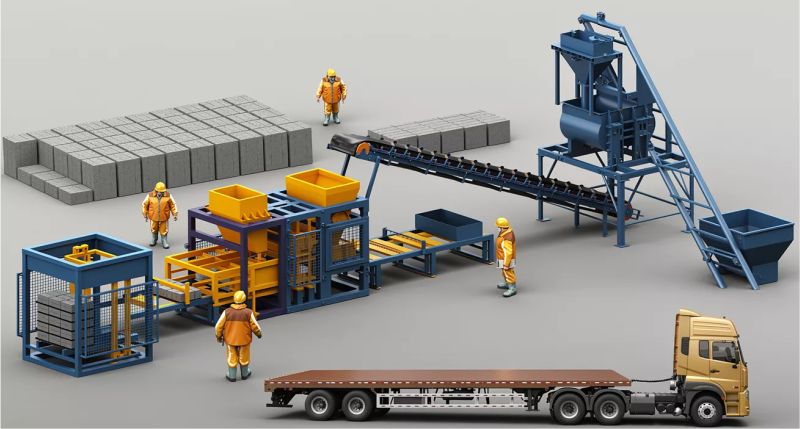
QT6-15 Block Machine
Proven Entry-Level Automatic Block Machine
The QT6-15 Block Machine is designed as a fixed, entry-level automatic block production solution for businesses moving beyond manual or semi-manual manufacturing. It offers a stable foundation for commercial block production while remaining practical and cost-effective for African operating environments.
Unlike the mobile configuration, this model is typically installed as a semi-permanent or permanent plant, making it suitable for operations that have secured a site and are planning consistent production.
Best suited for:
- New block yards establishing commercial-scale production
- Contractors producing blocks on-site for ongoing construction projects
- Developers stabilising block supply for housing or infrastructure programmes
- Businesses transitioning from manual production to automation
Key capabilities:
- Automatic hydraulic forming and vibration compaction, delivering consistent block density and repeatable quality
- Designed for continuous daily operation, supporting reliable output without excessive mechanical complexity
- Supports multiple product types, including hollow blocks, solid blocks, pavers and kerbs through interchangeable moulds
- Fixed plant configuration, providing improved stability and alignment compared to mobile systems
- Integrates into complete production lines, allowing connection to mixers, conveyors, stackers and curing systems as operations expand
Operational Context
The QT6-15 Block Machine is commonly selected as a first permanent plant. It allows manufacturers to establish predictable production, train operators on automated processes, and refine mix designs before scaling into higher-capacity systems.
Many operators use this model as a platform for growth, expanding output by upgrading supporting equipment rather than replacing the core machine prematurely.
PJR Engineering support includes:
- Plant layout guidance aligned to fixed site conditions
- Configuration advice based on local aggregates and power availability
- Operator orientation focused on consistency and uptime
- Spares planning to support uninterrupted production

QT8-15 Block Machine
Higher Output for Expanding Operations
The QT8-15 Block Machine is designed for manufacturers who have moved beyond entry-level production and now require higher, more consistent output to support growing demand. It provides a practical step up in capacity and production stability while remaining well suited to African operating conditions.
This model is commonly selected by businesses that have validated their market and are now focused on scaling production without moving into full industrial complexity too early.
Best suited for:
- Growing block yards experiencing steady and increasing demand
- Regional material suppliers expanding beyond localised supply
- Operations supplying multiple construction projects simultaneously
- Businesses planning structured growth over the next production phase
Key capabilities:
- Increased moulding capacity per cycle, supporting higher daily output compared to entry-level machines
- Stable hydraulic forming and vibration compaction, delivering consistent block quality during longer production shifts
- Designed for extended operating hours, making it suitable for commercial operations with continuous demand
- Supports a wide range of products, including hollow blocks, solid blocks, pavers and kerbs via interchangeable moulds
- Integrates seamlessly into automated production lines, allowing expansion with batching, conveying, stacking and curing systems
Operational Context
The QT8-15 Block Machine is often selected as the transition point between startup operations and mature commercial production. It allows manufacturers to increase output and improve production efficiency without the higher capital and infrastructure requirements of industrial-scale systems.
Many operators use this model to standardise production, improve consistency across shifts, and prepare their operation for future scale-up into larger machines as demand stabilises.
PJR Engineering support includes:
- Production line configuration guidance aligned to output targets
- Advice on batching, material flow and layout planning
- Operator orientation focused on productivity and consistency
- Spares planning aligned to operating hours and location

QT9-15 Block Machine
Stable Performance for Medium-to-Large Production
The QT9-15 Block Machine is designed for manufacturers operating at medium-to-large production scale where consistency, uptime and reliability are critical. It supports higher, more stable output across extended production periods, making it suitable for businesses supplying ongoing contracts, infrastructure projects or multi-site developments.
This model is typically selected once production demand has moved beyond growth phase and into operational maturity, where predictability matters as much as capacity.
Best suited for:
-
Established block manufacturers supplying continuous demand
-
Operations supporting municipal, infrastructure or housing programmes
-
Businesses producing for multiple sites or long-term contracts
-
Plants where production stability and repeatability are essential
Key capabilities:
-
Enhanced forming stability, supporting uniform block quality across long production runs
-
Controlled material feeding and vibration compaction, improving consistency when operating at higher volumes
-
Designed for multi-shift or extended daily operation, suitable for contract-driven production environments
-
Supports multiple concrete products, including hollow blocks, solid blocks, pavers and kerbs through interchangeable moulds
-
Integrates into more structured production lines, allowing refined material handling, stacking and curing workflows
Operational Context
The QT9-15 Block Machine is often introduced when an operation transitions from “growth mode” into delivery mode. At this stage, production reliability, quality consistency and uptime become as important as output capacity.
Many manufacturers use this model to standardise production across shifts, reduce quality variation and support repeat orders where block specification and delivery timelines must be met consistently.
PJR Engineering support includes:
-
Line configuration advice for stable, high-volume operation
-
Guidance on material flow, batching and curing layouts
-
Operator orientation focused on consistency and uptime
-
Spares planning aligned to multi-shift production schedules
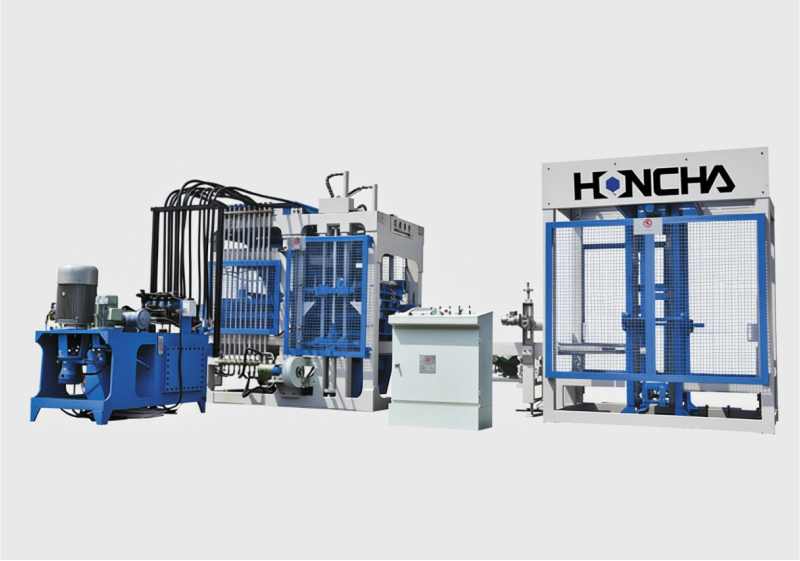
QT10-15 Block Machine
High-Capacity Commercial Production
The QT10-15 Block Machine is designed for manufacturers operating at high, sustained production volumes where throughput, efficiency and operational control directly impact profitability. It is suited to businesses supplying multiple projects, regional markets or continuous commercial demand.
This model is typically selected once production has moved firmly into scale mode, where the focus shifts from growth to optimising output, reducing unit cost and maintaining consistent delivery.
Best suited for:
-
High-demand block yards supplying multiple clients or regions
-
Manufacturers servicing large housing, infrastructure or commercial projects
-
Operations requiring reliable high daily output
-
Businesses planning long-term production at scale
Key capabilities:
-
Higher forming capacity per cycle, enabling increased daily output compared to medium-scale systems
-
Stable hydraulic forming and vibration performance, supporting consistent block quality at higher production volumes
-
Designed for continuous, high-intensity operation, suitable for demanding commercial environments
-
Supports a broad range of concrete products, including hollow blocks, solid blocks, pavers and kerbs through interchangeable moulds
-
Integrates into advanced production lines, allowing batching, conveying, stacking and curing systems to operate as a coordinated workflow
Operational Context
The QT10-15 Block Machine is often introduced when a business reaches a point where production capacity directly limits revenue growth. At this level, efficiency, material flow and uptime become critical drivers of cost control and delivery reliability.
Manufacturers using this model typically focus on process optimisation, refining batching accuracy, curing management and logistics to support sustained high-volume output.
PJR Engineering support includes:
-
Production line configuration for high-output environments
-
Guidance on batching accuracy, material flow and curing layout
-
Operator orientation focused on productivity and process control
-
Spares planning aligned to intensive production schedules
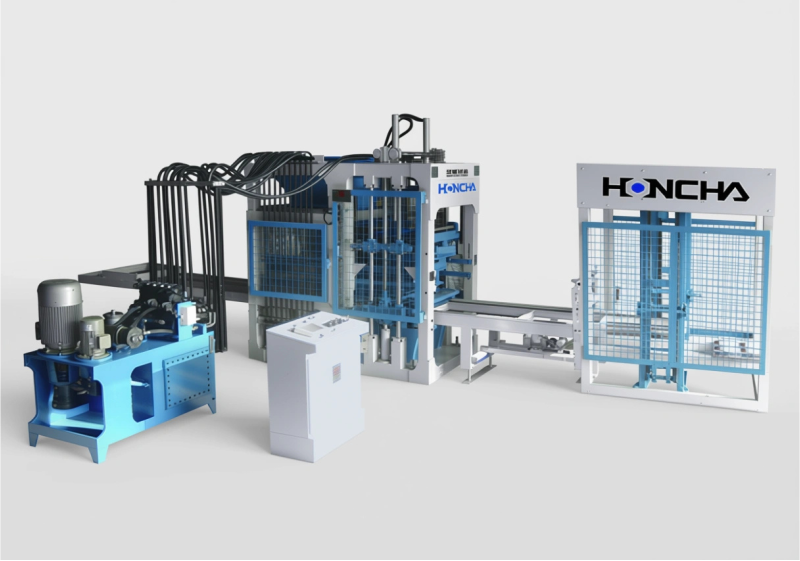
QT12-15 Block Machine
Industrial-Scale Block Manufacturing
The QT12-15 Block Machine is designed for industrial-scale concrete block manufacturing, where production runs are continuous, volumes are high, and operational discipline is essential. It is built for manufacturers supplying large housing programmes, infrastructure developments, and regional markets where reliability, repeatability and cost control are critical.
This model is typically selected by businesses that have moved beyond commercial block yards into fully structured, multi-shift production environments.
Best suited for:
-
Industrial block manufacturers supplying high-volume markets
-
Operations supporting housing programmes and major infrastructure projects
-
Plants running multiple shifts with sustained demand
-
Businesses focused on long-term production efficiency and scalability
Key capabilities:
-
Large moulding capacity per cycle, supporting very high daily output compared to commercial-scale systems
-
Highly stable hydraulic forming and vibration compaction, delivering uniform block quality across extended, multi-shift operation
-
Designed for continuous industrial production, where uptime and process consistency directly affect profitability
-
Supports a wide range of concrete products, including hollow blocks, solid blocks, pavers and kerbs through interchangeable moulds
-
Integrates into fully automated production plants, allowing batching, conveying, stacking and curing systems to operate as a coordinated industrial workflow
Operational Context
The QT12-15 Block Machine is typically introduced when block manufacturing becomes a core industrial activity rather than a supporting business unit. At this level, success depends on disciplined process control, including batching accuracy, curing management, logistics planning and maintenance scheduling.
Manufacturers operating this model focus on optimising unit cost, maintaining consistent quality across large volumes, and meeting strict delivery timelines over extended periods.
PJR Engineering support includes:
-
Industrial plant layout and production-flow planning
-
Guidance on batching systems, curing strategies and material handling
-
Operator orientation focused on process discipline and uptime
-
Spares and maintenance planning aligned to multi-shift industrial operation

How to Choose the Right QT Series Machine
Selecting the correct QT Series model depends on how your operation runs in practice, not just on headline output figures. Key considerations typically include:
-
Target production volume per shift or per day, based on real demand rather than theoretical capacity
-
Product mix, such as hollow blocks, solid blocks, pavers and kerbs, and how frequently mould changes are required
-
Available space and site layout, including material flow, curing areas and future expansion
-
Power supply stability, which directly affects production consistency and equipment selection
-
Labour availability and preferred automation level, influencing line configuration and operator requirements
-
Maintenance planning and spares logistics, particularly for sites operating continuously or in remote locations
PJR Engineering works closely with clients to align machine selection, line configuration and long-term expansion planning with real operating conditions, ensuring each QT Series installation is fit for purpose from day one.
Supporting Your QT Series Project From Specification to Production
PJR Engineering operates as a technical supply and project support partner, not a catalogue reseller. Our focus is on ensuring that each QT Series installation is correctly specified, practically configured and sustainable over its full operating life.
Clients work with us because we provide:
-
New, factory-built QT Series machinery, supplied with a long-term operational view rather than short-term sales focus
-
Pricing aligned to African markets, balancing capital investment with realistic production objectives
-
Pre-sales technical consultation and specification guidance, helping clients select the correct machine and line configuration from the outset
-
Practical advice on aggregates, power and site realities, informed by real operating conditions across African markets
-
A long-term operational mindset, focused on uptime, maintenance planning and sustainable production
Our approach ensures that every QT Series installation is fit for purpose from day one and resilient across changing production demands over its operating life.
Frequently Asked Questions
Can QT Series machines produce both blocks and pavers?
Yes. All QT Series machines are designed to manufacture a range of concrete products, including hollow blocks, solid blocks, pavers and kerb stones. Product changes are achieved through interchangeable moulds and appropriate line configuration, allowing manufacturers to adapt output to market demand.
Are QT Series machines suitable for African aggregates and materials?
Yes, QT Series machines are suitable for African operating conditions. However, mix design plays a critical role in final product quality. Local aggregates, sand grading and cement characteristics should be considered during setup. PJR Engineering provides guidance during technical consultation to ensure the machine and mix design are aligned to local materials.
Do QT Series machines require a fully automated production line?
No. QT Series machines can be configured in both semi-automated and fully automated production lines. The appropriate level of automation depends on production targets, labour availability, site layout and budget. Line configuration is discussed during pre-sales consultation to ensure practical and scalable implementation.
Do you assist with installation and commissioning?
Yes. PJR Engineering provides commissioning frameworks, installation guidance and operator orientation as part of the project support process. The level of on-site or remote support is defined during project planning and aligned to location, logistics and operational requirements.
What power supply is required for QT Series machines?
Power requirements vary depending on the specific QT model, line configuration and level of automation. Stable power supply is essential for consistent operation and product quality. Electrical requirements are confirmed during specification to ensure compatibility with local infrastructure.
How do I choose the correct QT Series model for my operation?
Machine selection depends on more than production capacity alone. Factors such as target output per shift, product mix, available space, power stability, labour availability and future expansion plans must be considered. PJR Engineering works with clients to align model selection and plant configuration with real operating conditions.
What maintenance and spares planning is required?
Routine maintenance is essential for long-term reliability and uptime. Critical spares planning depends on production intensity, operating environment and logistical lead times. PJR Engineering assists clients with maintenance planning and spares recommendations as part of long-term operational support.
What is the typical lead time for QT Series machinery?
Lead time depends on machine model, configuration, production scheduling and destination country. Final timelines are confirmed during quotation and project planning to ensure realistic delivery expectations.
Can QT Series plants be expanded in the future?
Yes. QT Series machines are commonly selected for their scalability. Many installations are designed with future expansion in mind, allowing additional automation, handling equipment or capacity upgrades as demand grows.
Request a Quote or Technical Consultation
If you are planning a block manufacturing operation or expanding an existing plant, PJR Engineering can assist with machine selection, plant layout and long-term production planning.
To prepare an accurate quotation, we will discuss:
-
Country and site location
-
Products to be manufactured
-
Target output per shift or per day
-
Power availability
-
Preferred automation level and budget range